
By Bhavya Balamurali
Stories of everyday life move alongside forests, birds, animals and trees in Mayank Singh Shyam’s canvases, intertwining the present with stories rooted in mythology and memory and passed down through the Pardhan Gond tradition. His paintings carry the influence of his father, the legendary Gond artist Jangarh Singh Shyam, while developing a visual language distinctly his own.
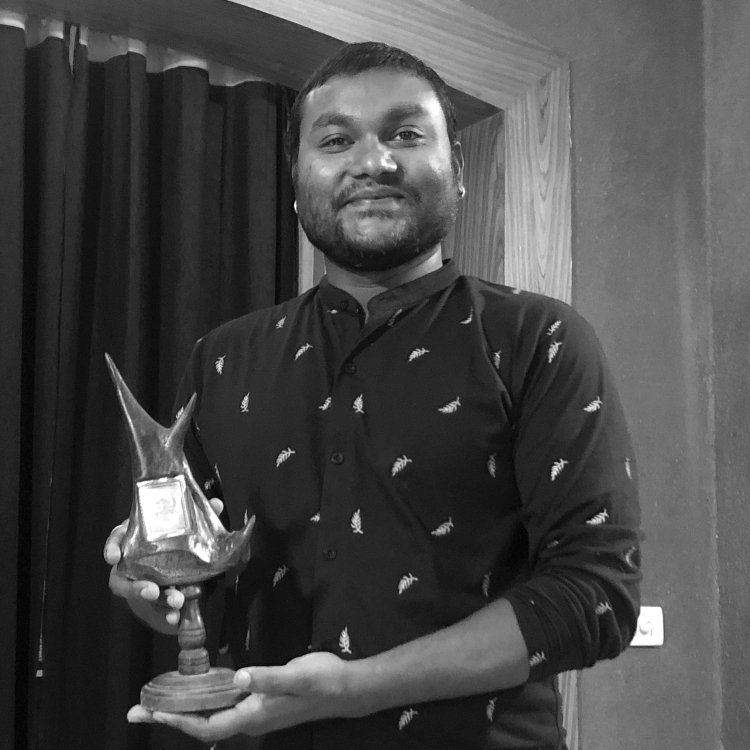
At Ojas Art, Three Spaces: Paatal · Dharti · Aakash brings together five years of Mayank’s practice, alongside a new series of works made using soil and colours derived from leaves and other natural elements. The exhibition marks his first solo presentation with the gallery. Ojas is also presenting a selection of works by Jangarh Singh Shyam, placing the work of father and son within the same exhibition.
Founded by Anubhav Nath, Ojas Art has spent years working with artists from different communities, traditions and tribal backgrounds, with a particular engagement with contemporary indigenous art. Its exhibitions have brought practices rooted in living traditions into the contemporary gallery, allowing them to be seen not as static forms but as practices that continue to change.
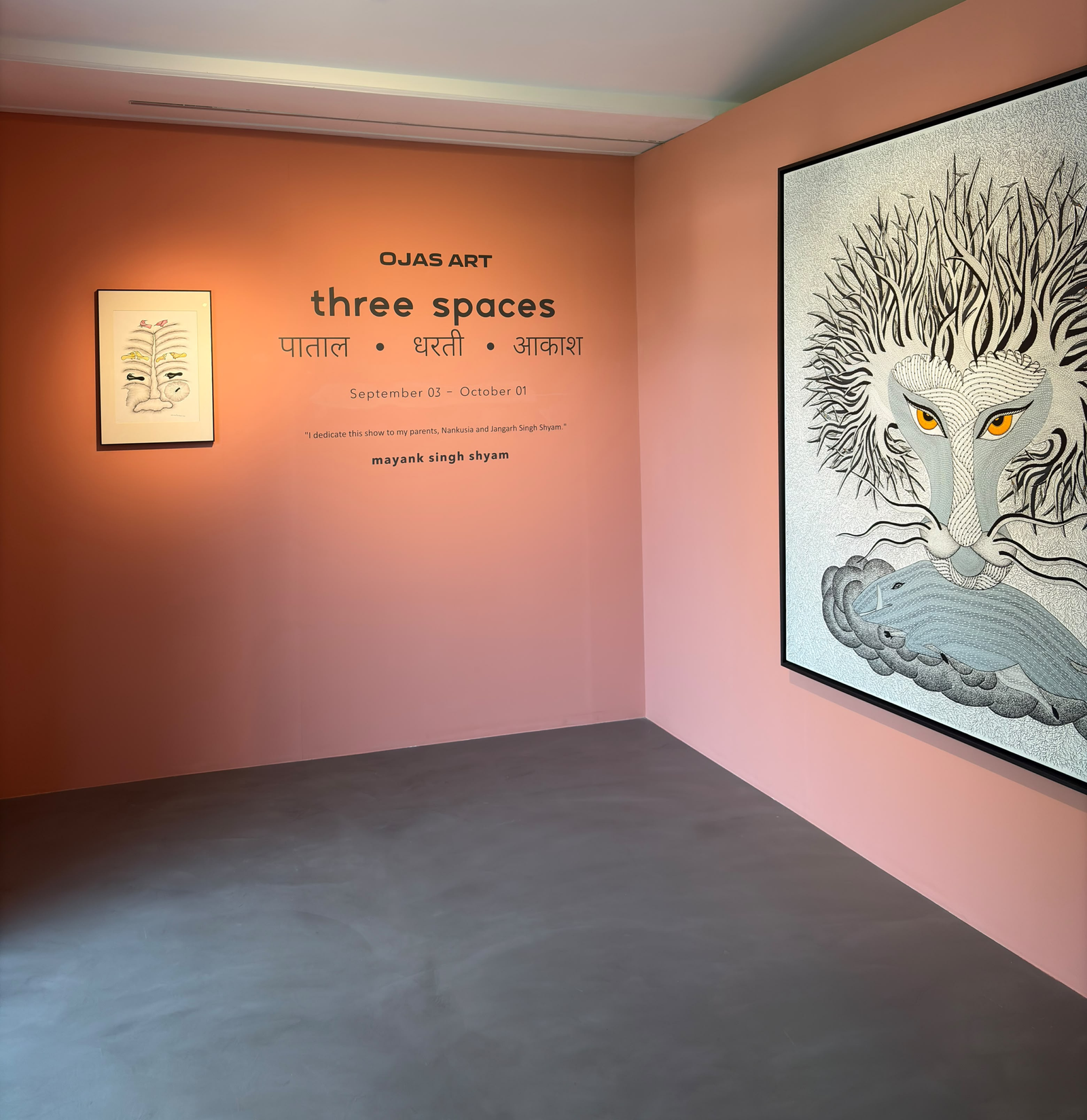
Gond art is one such tradition. Rooted in the communities of central India, it has historically existed across walls, domestic spaces and ritual contexts, before finding new forms on paper and canvas. Its transition into the contemporary gallery has been accompanied by artists continually reinterpreting its visual language.
Jangarh Singh Shyam was central to this transformation. His practice brought Pardhan Gond storytelling into a distinct contemporary vocabulary and opened possibilities for a generation of artists who followed. Mayank’s practice emerges from this history, but his paintings are concerned with more than continuing what his father began.
His canvases bring mythology into contact with the everyday. Birds, animals, trees and human figures populate densely layered worlds in which memory and contemporary life exist alongside one another. A work depicting Ganesh holding a cactus tree as he protects his mother is one example of this merging of the familiar and the unexpected. The cactus becomes part of the narrative rather than simply a botanical detail, bringing the natural world into a mythological scene.
That relationship with nature becomes even more literal in the new works. Mayank has experimented with soil and pigments derived from leaves and other natural elements, allowing materials from the natural world to become part of the making of the paintings themselves. Here, nature is not only something represented within the image. It also contributes to the image’s physical existence.
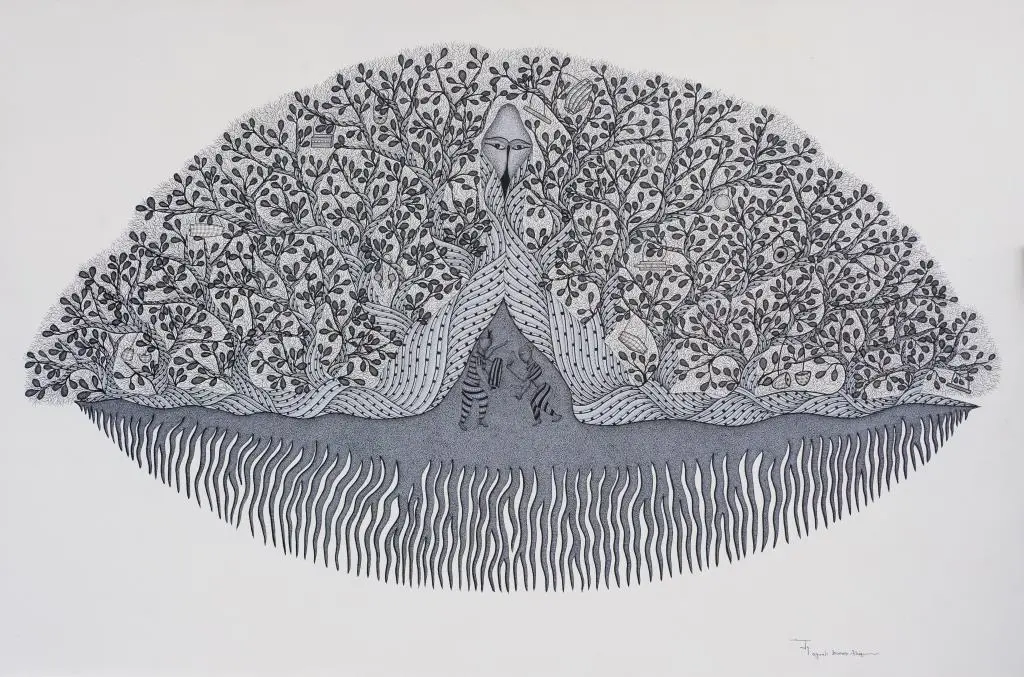
The three spaces of the exhibition’s title, Paatal, Dharti and Aakash, draw from the cosmological imagination of the Pardhan Gond community. In Mayank’s interpretation, they become spaces through which mythology, nature and memory can intersect. His dense patterns and flowing forms allow animals, plants and figures to move through these worlds, creating narratives that feel rooted in an older visual language while remaining connected to the present.
This is where the distinction between influence and imitation becomes important. Mayank’s relationship with Jangarh is visible, but not through a direct replication of his father’s style. The inheritance lies instead in the possibilities opened by the tradition itself. Mayank takes those possibilities into his own experiences, observations and experiments with material.
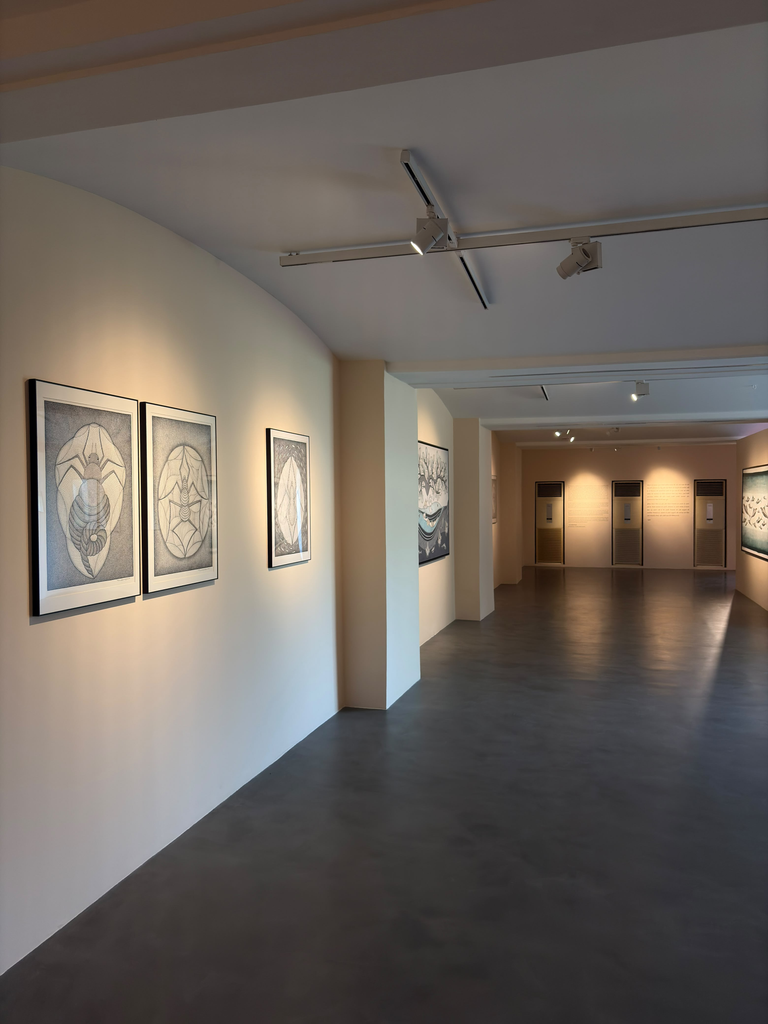
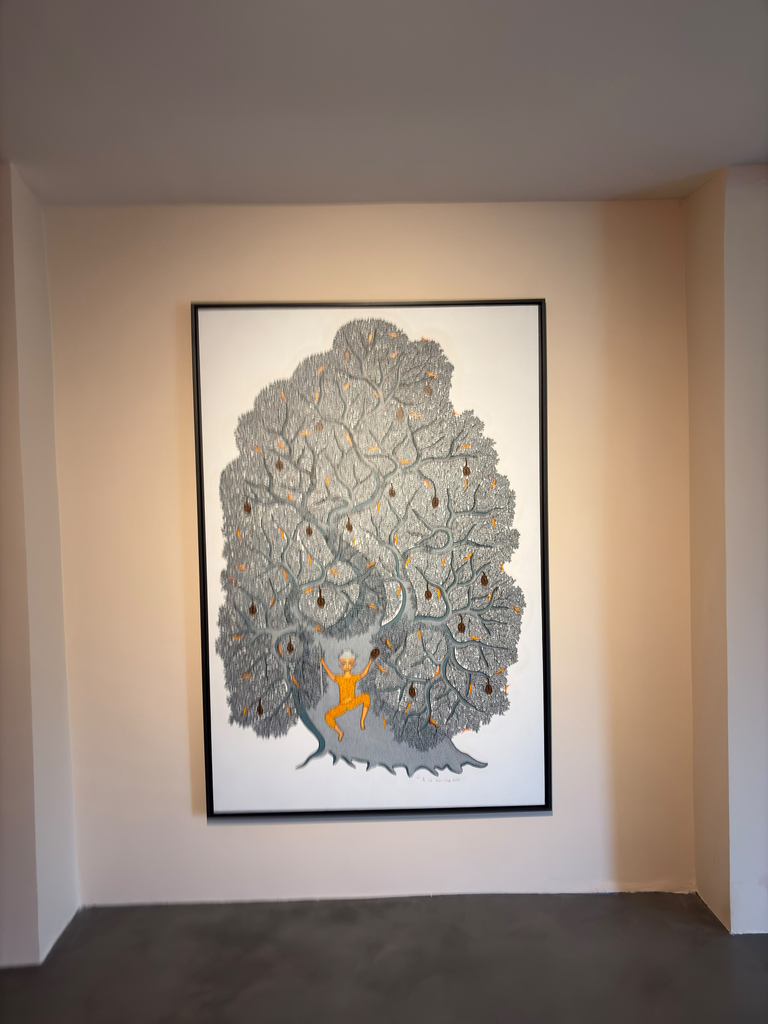
The five years of work brought together at Ojas make this development visible. Seen alongside the works of Jangarh Singh Shyam, the exhibition becomes both a personal and artistic encounter with inheritance. It also places Mayank within the wider story of the Jangarh Kalam and the artists who have continued to carry its possibilities forward.
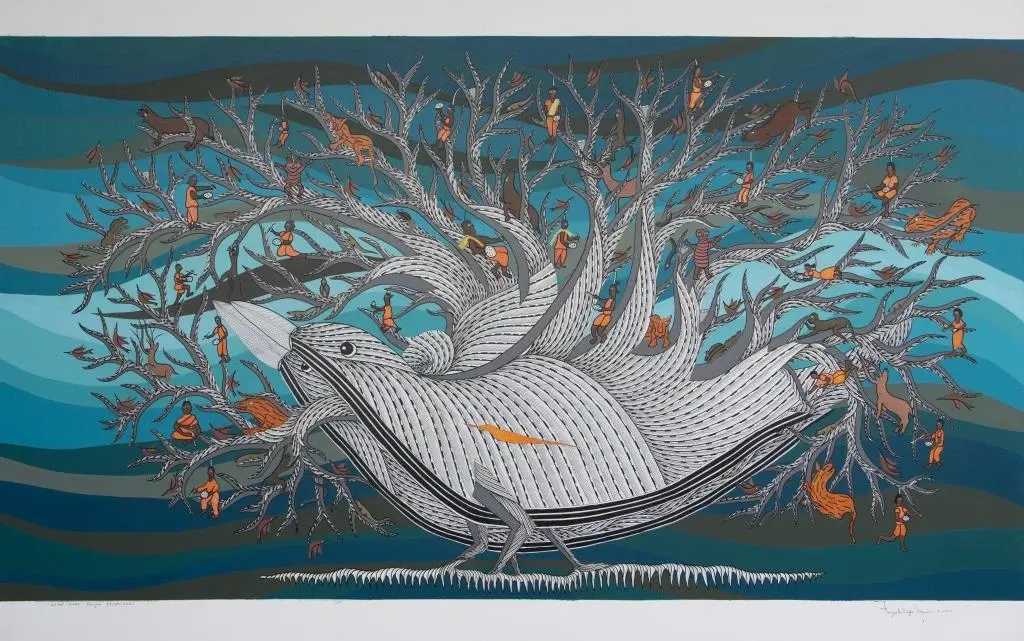
The exhibition’s sense of inheritance extends beyond Jangarh. Mayank’s work also carries connections to his mother and to the people who have shaped his artistic journey, including Jagdish Swaminathan, making memory an important part of the practice. Rather than treating tradition as something that needs to be preserved unchanged, his work suggests that it can remain alive precisely because it continues to be interpreted, questioned and transformed.
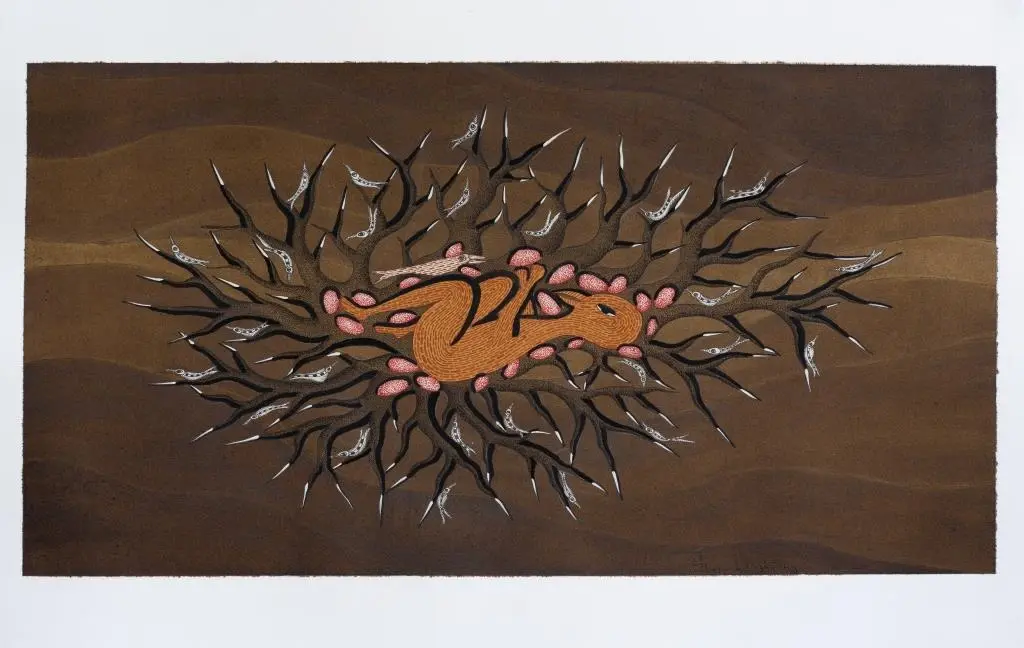
In Three Spaces, mythology finds its way into the contemporary, natural materials become part of the image, and an inherited artistic language takes on another voice. For Mayank Singh Shyam, carrying a tradition forward does not mean repeating it. It means finding new ways for it to speak.
Three Spaces: Paatal · Dharti · Aakash is currently on view at Ojas Art, New Delhi, until October 1.


