



By Bhavya Balamurali
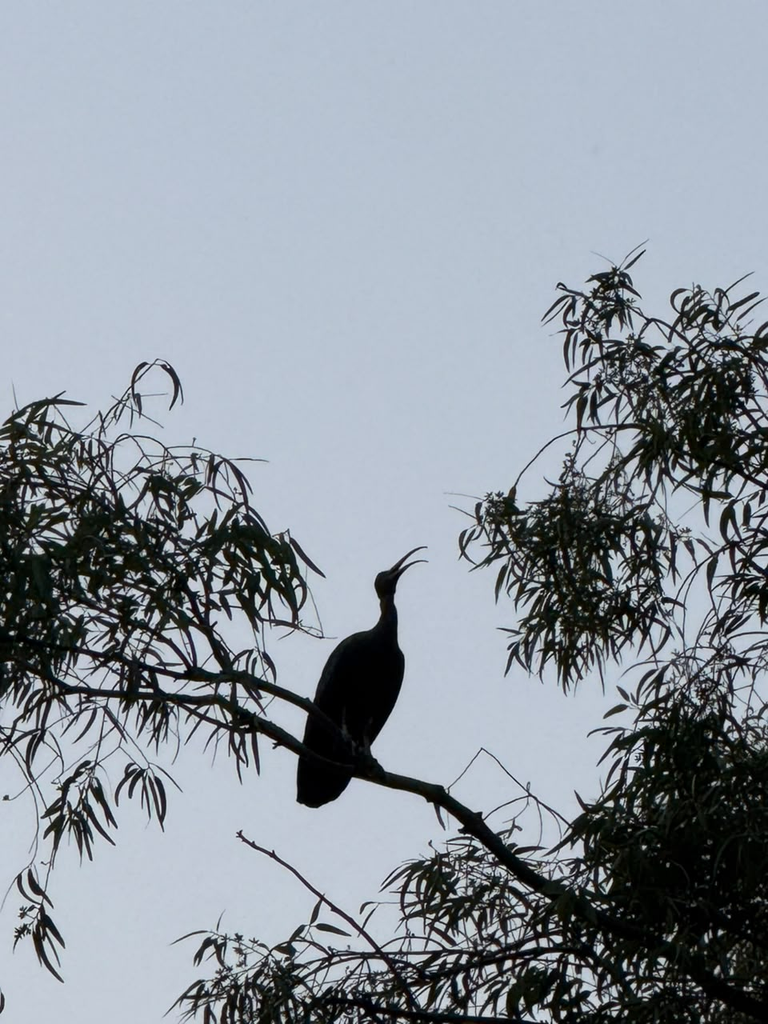
Every evening, just outside Alliance Française de Delhi, the red-necked ibises arrive.
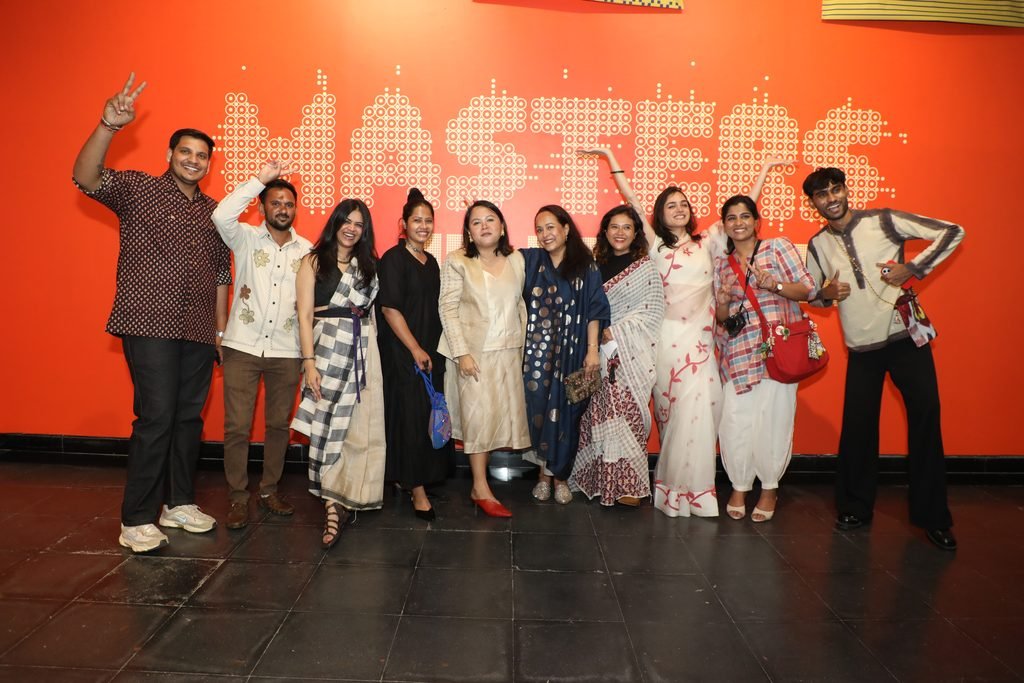
They come in flocks, hundreds of them settling into the trees around the compound, their silhouettes gathering against the evening sky. And then they begin to scream. It is a surprisingly loud soundtrack for the otherwise unhurried surroundings of Galerie Romain Rolland, where, over the past few days, another kind of gathering has been taking place: twenty textile practitioners, their materials, techniques and generations of inherited knowledge brought together for Masters in Making: Threads of Continuum — Reweaving the Future of Heritage.
We had noticed the birds before and by the time we left the exhibition, we had begun to wonder if there was something fitting about that.
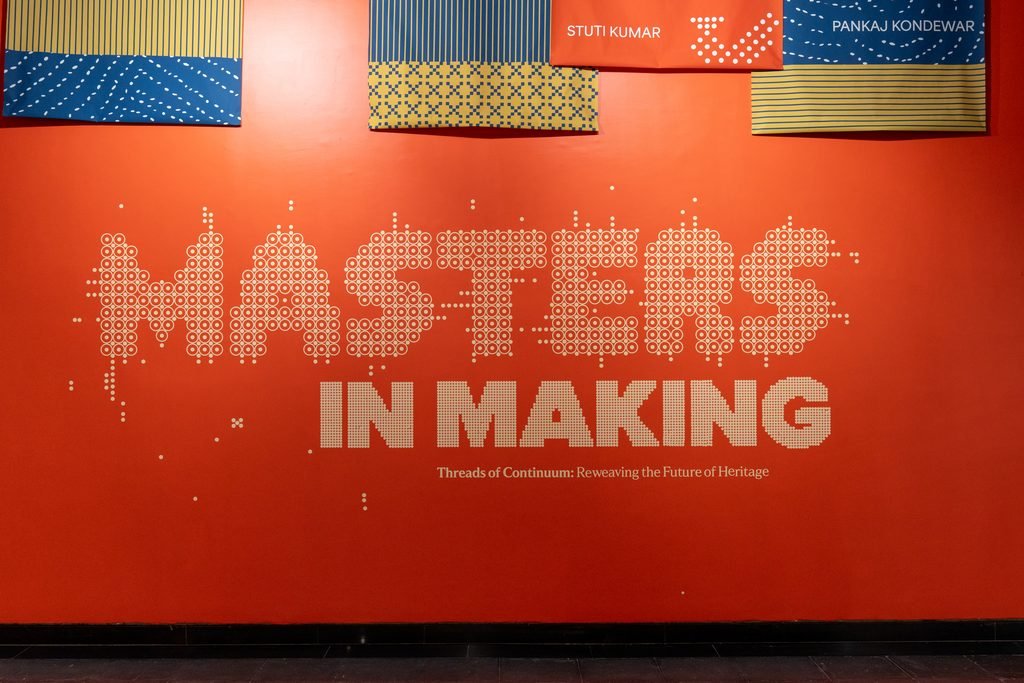
Presented by Burgoyne Original Masters (BOM), in collaboration with Art Culture Festival India, Masters in Making is the culmination of BOM’s inaugural grant initiative. BOM is a cultural patronage platform that grew out of the century-old heritage of WFB Baird & Co., extending its long relationship with material and craftsmanship into art, craft, design and culture. Its focus is particularly drawn to textile heritage, indigenous knowledge systems, material culture and the people who keep these practices alive.
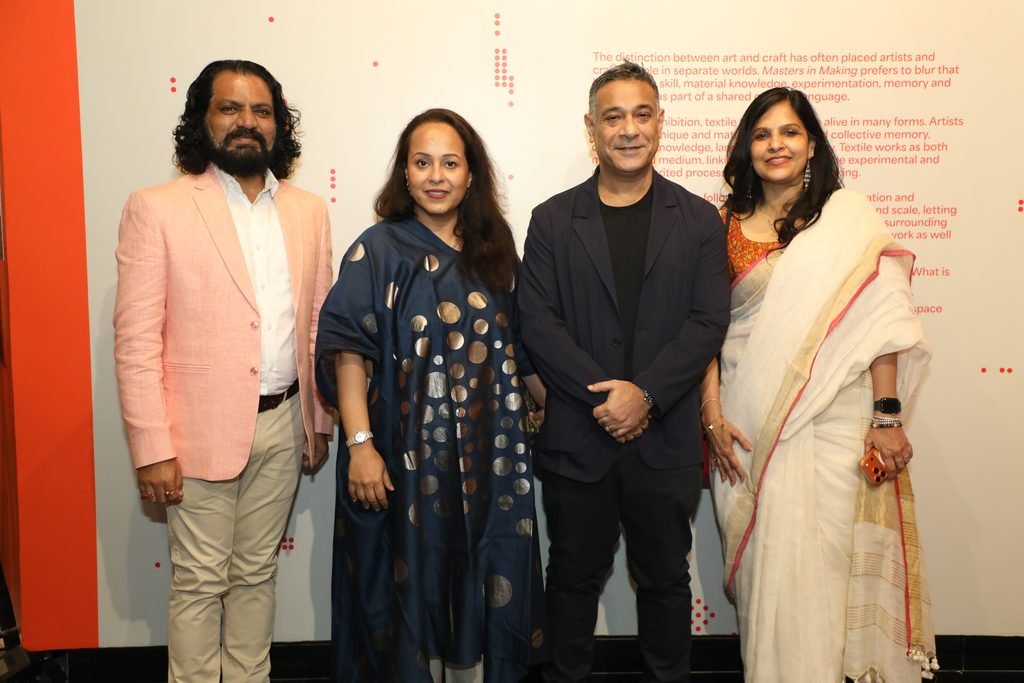
The initiative was conceptualized by Aparupa Ray Ganguly, Curator and Creative Consultant at BOM, whose approach to the grant was rooted in the belief that India’s textile traditions should not simply be archived, but given room to evolve. Her idea was to create a space for artists, artisans, craftspeople and collectives to work between inherited knowledge and contemporary expression.
More than 180 applications came in from across India.
What followed was not simply a selection process, but layers of looking.
The jury consisted of together Dr Madan Meena, Hema Shroff Patel, Dr Vandana Kabra Bhandari and Sreyansi Singh. Each arrived with a very different relationship to textile and craft. Dr. Meena’s long-standing research into Rajasthani textiles and folk traditions treats cloth almost as an archive of community memory, ecology and social history. Hema Shroff Patel, through Amba Weave and her long engagement with Indian handloom, has worked extensively towards preserving traditional weaving while finding contemporary expressions for it. Dr. Vandana Kabra Bhandari brings decades of work across fashion, textiles, craft research and the documentation of languishing traditions. Sreyansi Singh’s curatorial and research practice focuses on contemporary textile art and clothes-making, particularly the politics of labour, authorship, material histories and the communities behind the making.
Together, they brought to the selection something more valuable than a single definition of what constituted a successful textile practice: knowledge of the material, the maker, the community and the contemporary possibilities of the form.
On paper, it sounds like a familiar premise: an exhibition about heritage, craft and the future of Indian textiles.
Inside, it feels considerably more alive.
There is no single idea of what an Indian textile is here. Instead, there are fibres that seem to hold the landscape they came from, techniques passed down through families, embroideries that carry community histories, discarded textiles given another life and practices that have survived because someone, somewhere, continued to teach them. Alongside inherited traditions are self-taught artists who have developed their craft through experimentation and instinct.
The further you move through the exhibition, the harder it becomes to separate the textile from the people and places that produced it.
Perhaps that is where Threads of Continuum gets its title right.
A thread, after all, is never simply a line.
It connects.
The material remembers
The five recipients of the Masters in Making grant sit at the centre of the exhibition, each arriving with a different relationship to inheritance.
Jagrity Phukan, who received the first position, works with Muga, Eri and Mulberry silk traditions of the Brahmaputra Valley. Her practice begins with an awareness that seems increasingly rare in contemporary design: that the story of a textile begins long before the finished object.
Muga silk is particularly difficult to look away from. Its natural golden lustre has an almost strange luminosity, the kind of surface that makes you want to move closer. But Jagrity’s work asks us to look past that first attraction, towards the systems that produce it: the farmers, spinners, dyers and weavers and the ecological conditions that allow the fibre to exist in the first place.
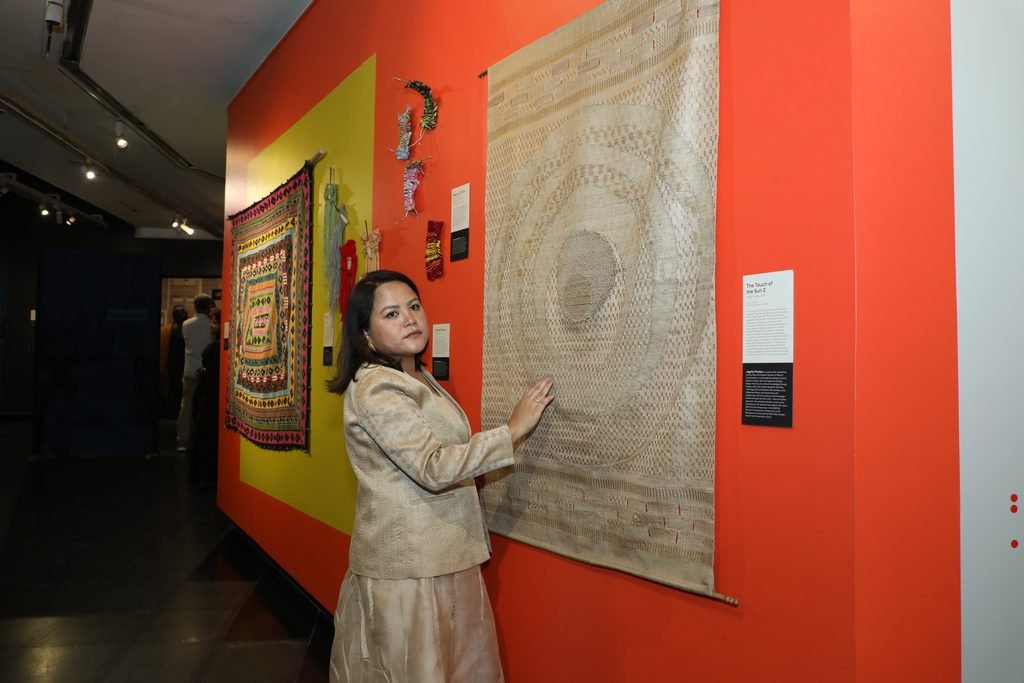
Her Soil to Silk — Fibre to Fashion approach brings material, ecology, labour and inherited knowledge into the same frame. She does not treat craft as an aesthetic vocabulary to borrow from. She works within the ecosystem that gives the material meaning.
Porgai Artisan Association brings together a collective of women artisans from the Sittilingi Valley in Tamil Nadu, working with Lambadi embroidery.
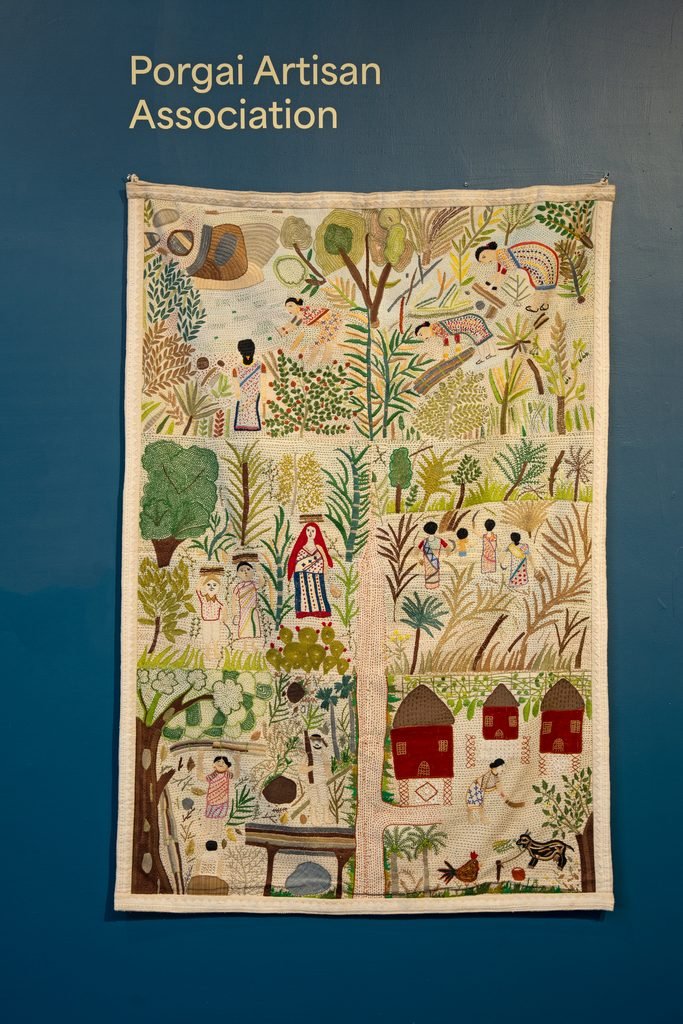
The embroidery is intricate, colourful and immediately arresting. But the more interesting story is what lies behind it. The practice had come close to disappearing as traditional dress and the circumstances around it changed. Its revival has created livelihoods for women artisans while bringing the embroidery back into contemporary circulation.
Here, preservation is inseparable from livelihood.
A craft does not remain alive because it is declared important. Someone has to make it. Someone has to be able to earn from making it and most importantly, someone has to teach it.
That thought follows you to Dinesh Chhipa’s work.
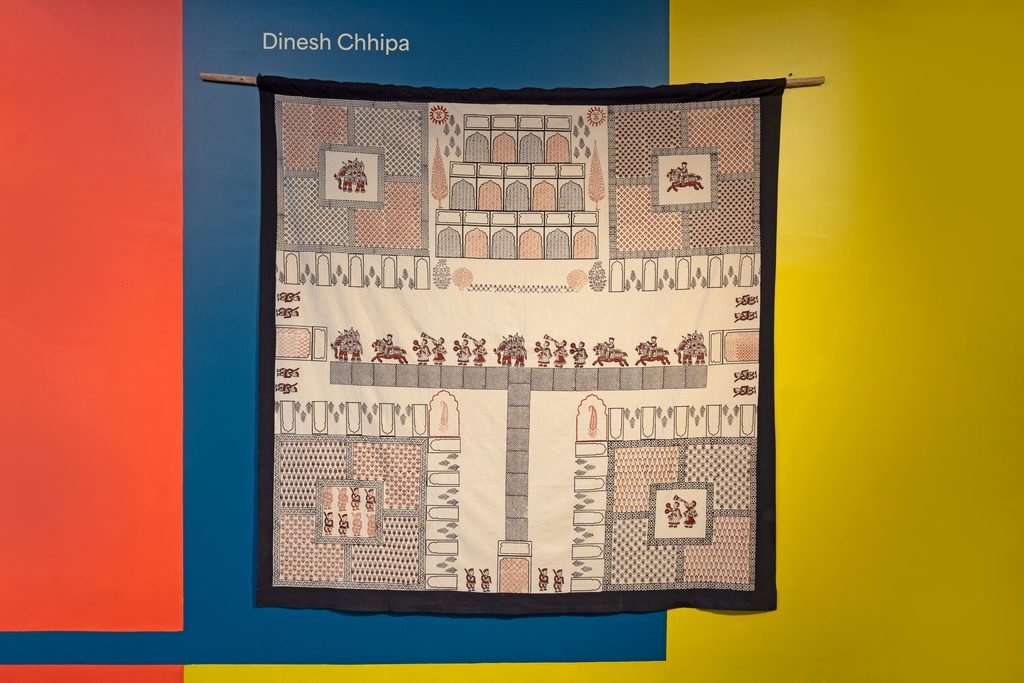
A fourth-generation textile artist and designer from Bagru, Rajasthan, Chhipa grew up around the hand block printing, dyeing and washing processes of his community. His formal training at the Indian Institute of Craft & Design gave him the opportunity to look back at what he had inherited with a new vocabulary.
His practice returns to Bagru’s complete printing process, including the increasingly rare Fadat technique and use of the ancient blocks, bringing attention to the knowledge contained within the stages that can so easily disappear behind the finished cloth.
There is something wonderfully unhurried about this way of looking at craft.
We are so accustomed to seeing the final product that we forget how many decisions sit beneath it. The dye has a source. The fibre has a landscape. The pattern has a history. The hand has learnt something that cannot always be explained in words.
And then there is Tangaliya.
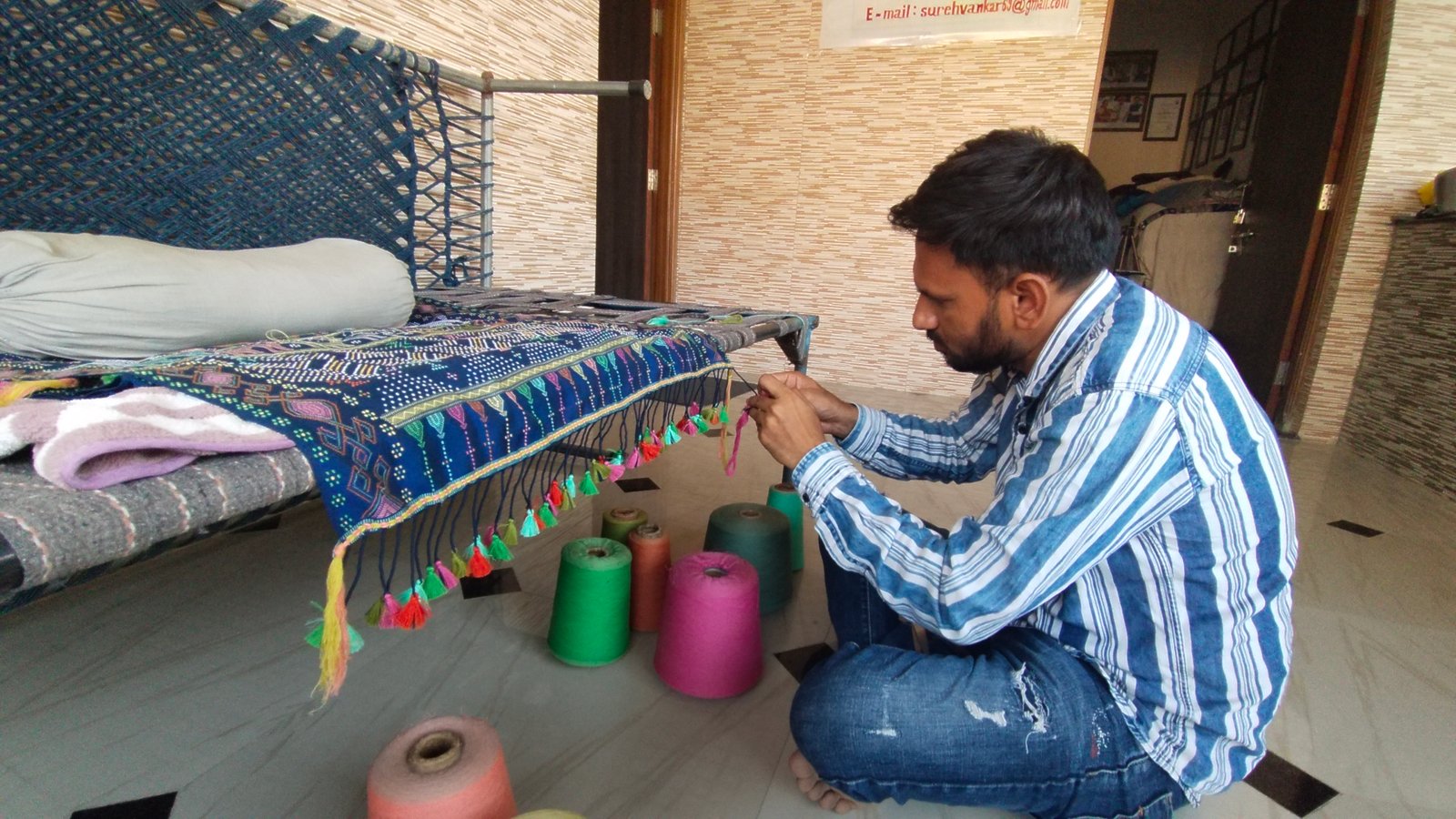
Jitendra Maganbhai Dhaiyda comes from Adhoi in Kutch and works within a weaving tradition that has been carried through his family for years. He learnt Tangaliya from his grandfather and father and has, in turn, taught the technique to the younger generation.
Standing before work rooted in such a long lineage, the word heritage can suddenly feel inadequate.
It makes something living sound like something already completed.
Dhaiyda’s practice suggests otherwise. The tradition exists because it continues to pass between hands.
And then we arrive at Kanmai Payun.
A master handloom weaver from the Mishing community of Majuli, Payun carries rare weaving techniques including Fulor Saneki, Gadu and four-paddle weaving on the traditional earth loom. Her practice is also connected to the work of the Kiron Foundation, which supports the preservation and continuation of indigenous textile knowledge and livelihoods in Majuli.
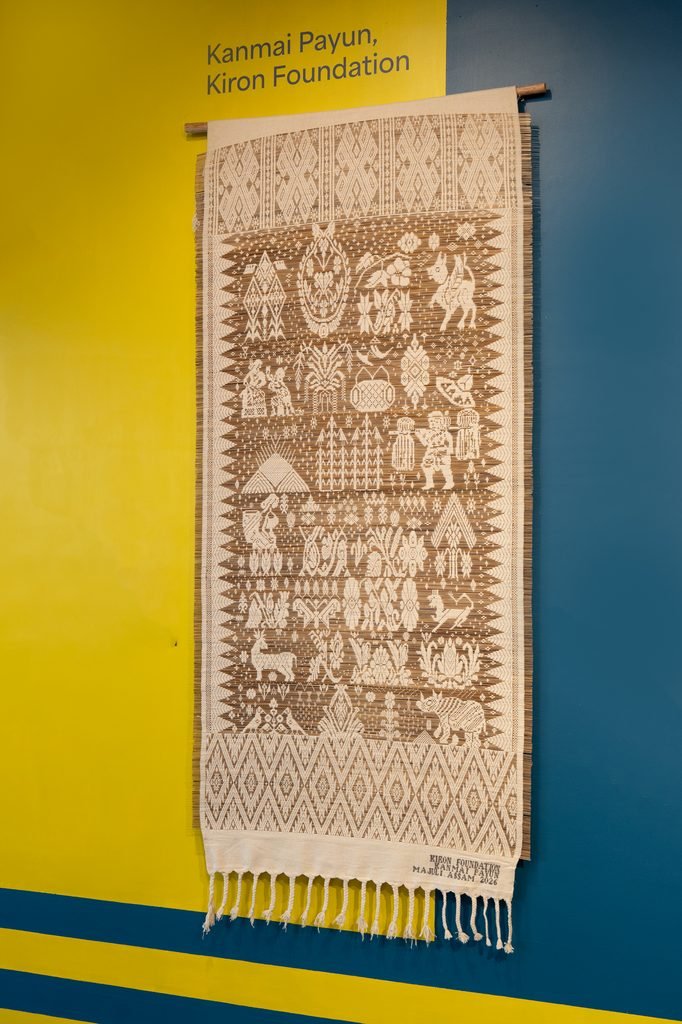
There is something especially moving about encountering Kanmai’s work in an exhibition like this because, for her, this was not simply another gallery presentation. Masters in Making marked the first time her work had been exhibited in this context, bringing a practice that has largely existed within its community into a contemporary exhibition space.
The rarity of what she practises makes the moment even more significant. Fulor Saneki is an exceptionally uncommon weaving tradition, and Kanmai is described within the context of the initiative as its only known practitioner in India continuing the technique.
Suddenly, the word continuum feels less abstract.
It is a person.
It is Kanmai sitting at an earth loom, carrying something forward that could very easily have stopped with her generation.
Her work belongs to a textile culture deeply tied to place, community and memory, but its presence in the exhibition shifts the way we think about what an exhibition can do.
This is not simply an object being displayed.
It is knowledge being given another place to exist.
Many threads, one continuum
The five grant recipients may sit at the centre, but they are not the whole story.
Around them is a wider group of fifteen finalist entries, each bringing another way of thinking about textile, material and inherited knowledge into the room.
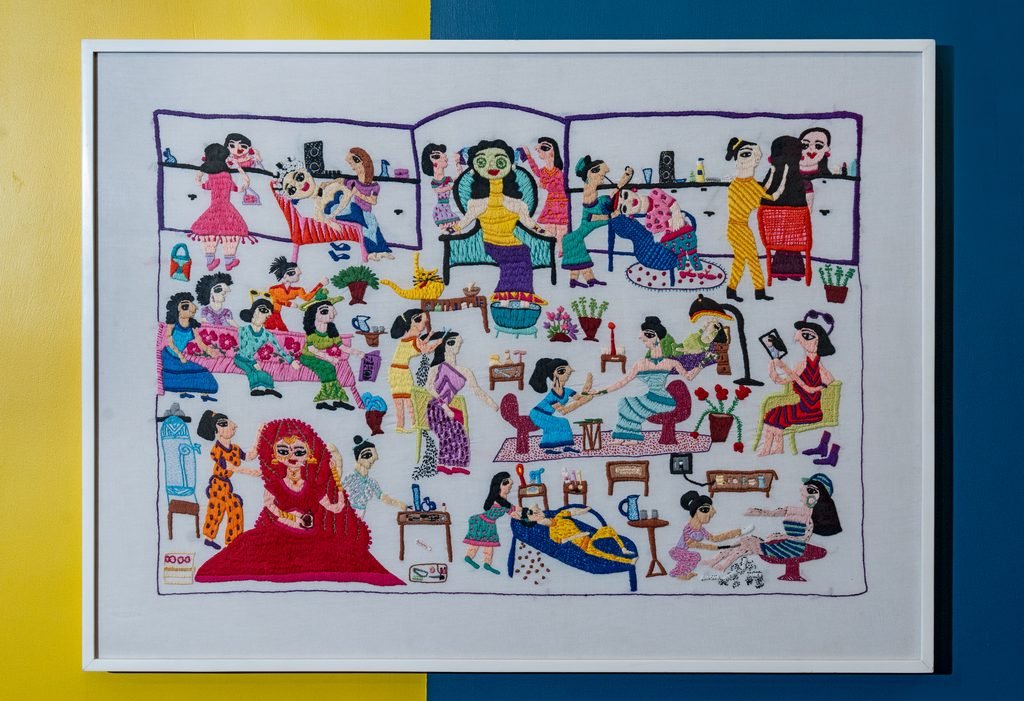
Pooja Dhingra, Usha Dhingra and Sangita Jogi come together as one finalist entry, bringing participatory design, embroidery and lived experience into conversation. Pooja’s Rafooghar, the house that mends, creates a space where women gather to embroider and share stories, while Sangita Jogi’s practice draws from womanhood, labour, caregiving, aspiration and survival. Usha Dhingra’s return to embroidery after three decades adds yet another layer to the idea of craft as something that can be resumed, remembered and reclaimed.
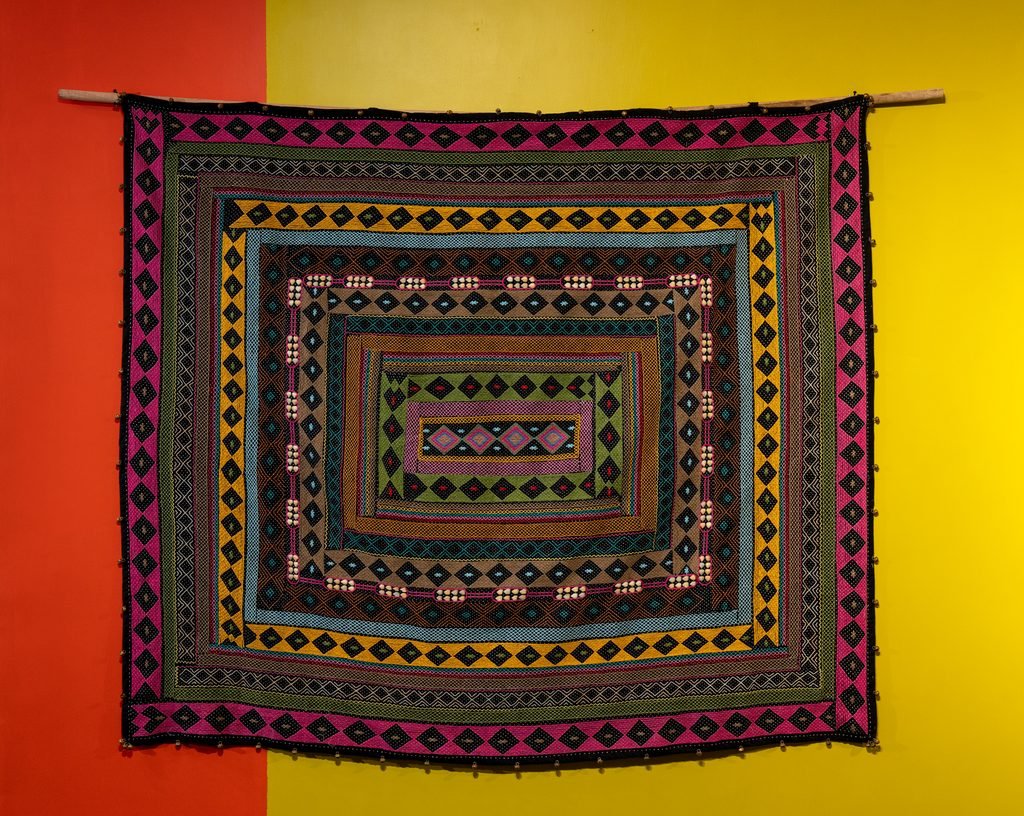
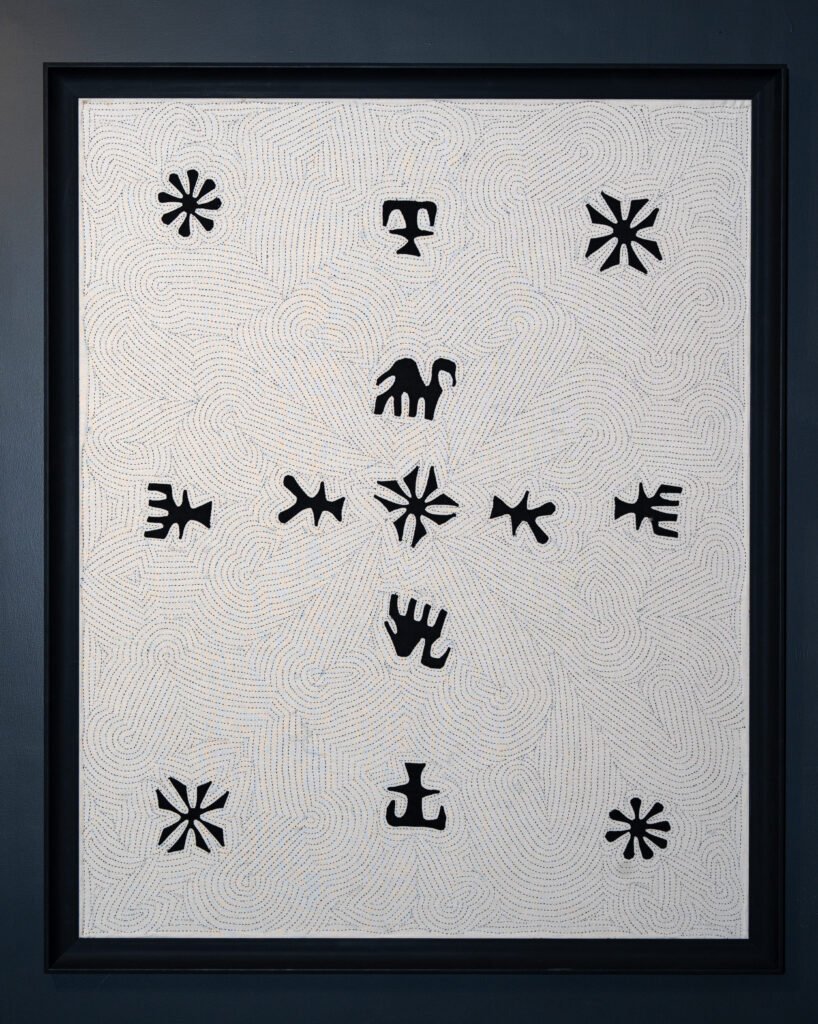
Juhi Sharma works with women from nomadic, denotified and Indigenous Kalbelia communities in Rajasthan, bringing together embroidery, natural dyeing, handspinning and handweaving. Geeta Rabari works within the Dhebariya Rabari tradition of hand-stitched mirror embroidery, drawing from nature, local flora and fauna and traditional storytelling.
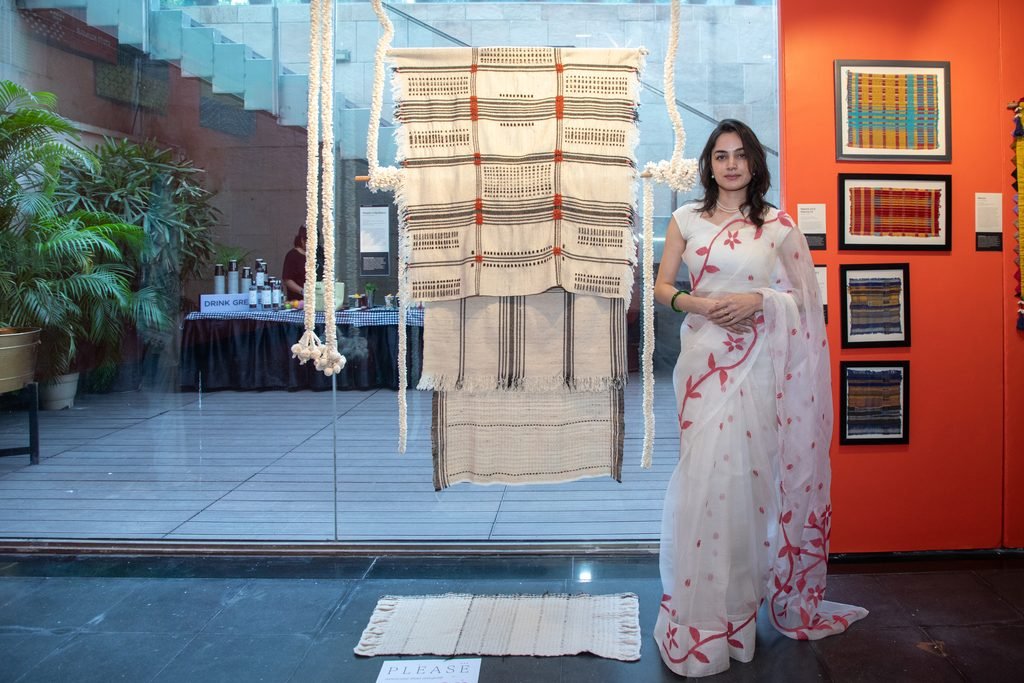
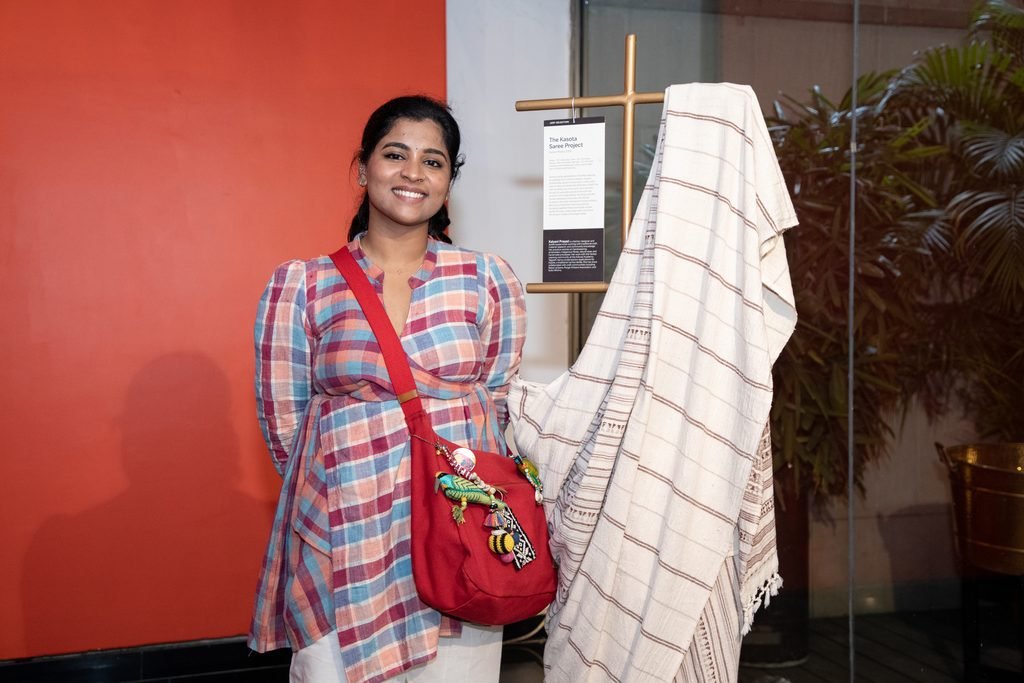
Malvika Kaushik works with local weaving families. Approaching textiles through material research, fibre study and craft collaboration, asking how existing techniques might be reinterpreted without being stripped of their origins. Kalyani Prasad similarly looks at how inherited textile systems can move into contemporary forms while remaining connected to the communities that hold them.
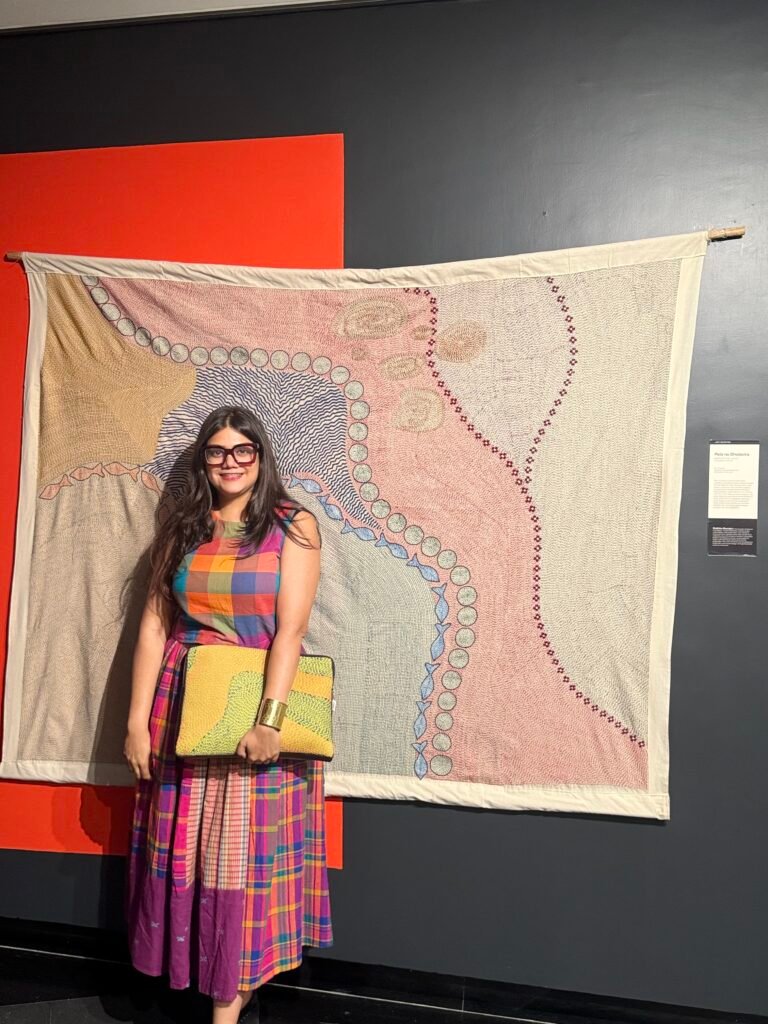
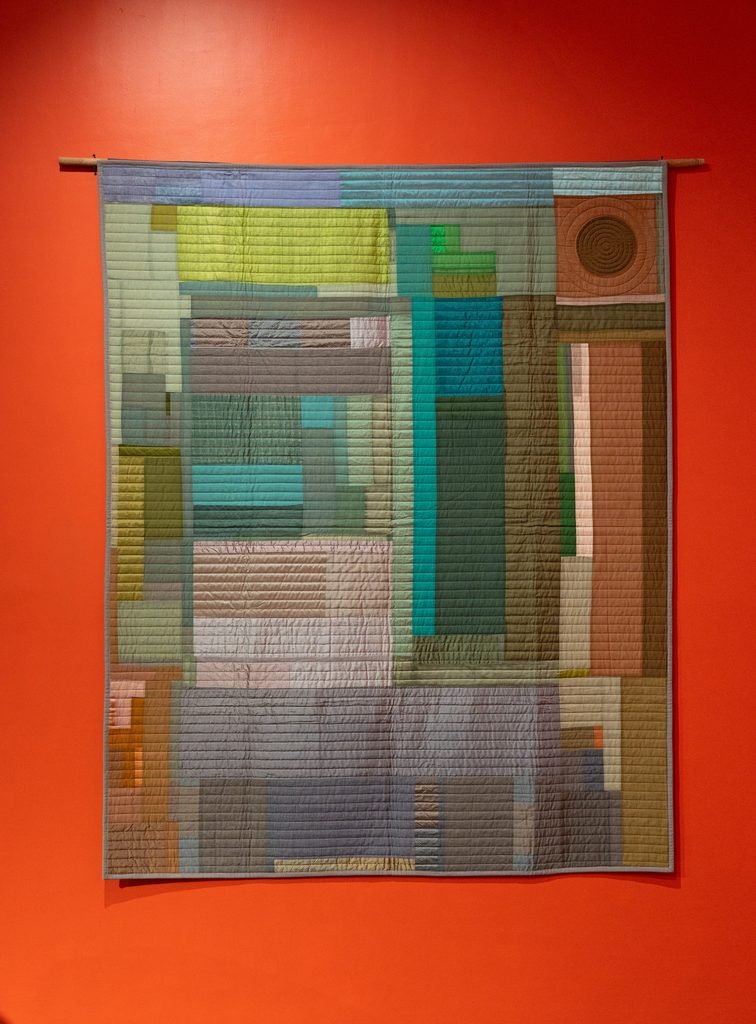
Upraant Foundation, founded by Riddhika Bhandari, works at the intersection of textile waste, craft preservation and women’s livelihoods, collaborating with women from underserved communities, including slum dweller, to reimagine discarded textiles through techniques such as Kantha embroidery. Kamala Murali turns reclaimed textiles into patchwork, quilting and abstract compositions, finding new possibilities in materials that have already had another life.
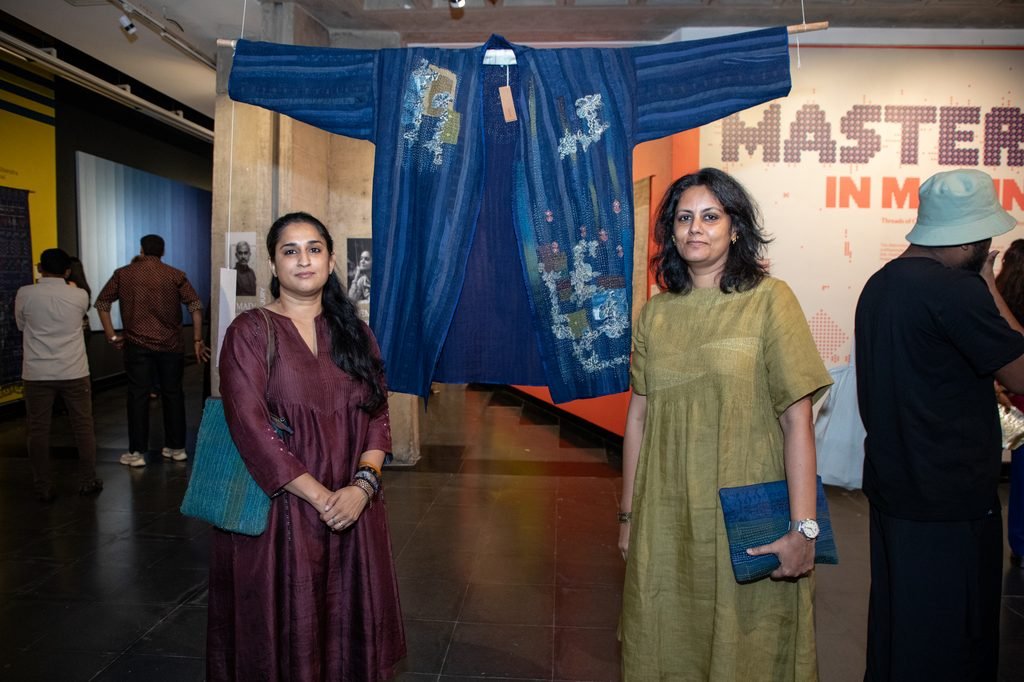
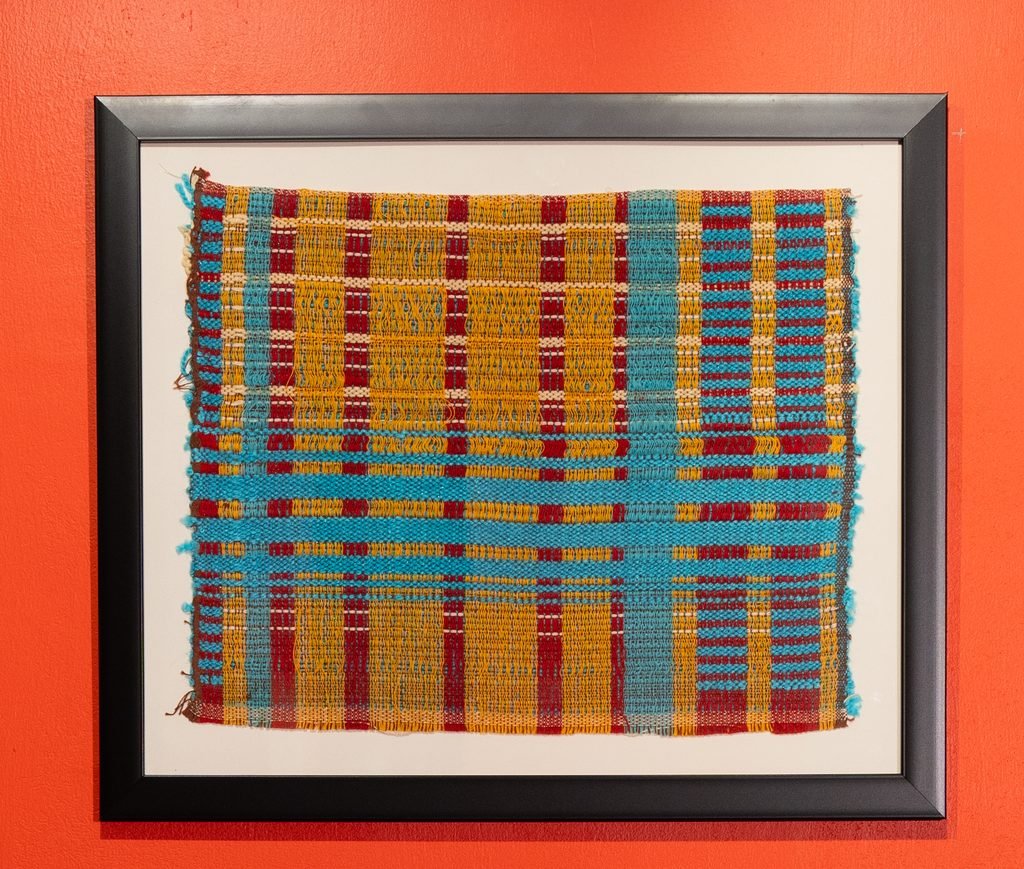
Indigene, co-founded by Ruchi Tripathi and Jaya Bhatt, works across textile design, traditional craft and artisan communities, developing contemporary possibilities through hand embroidery, hand weaving, tie-dye and batik while retaining a commitment to handmade and circular production.
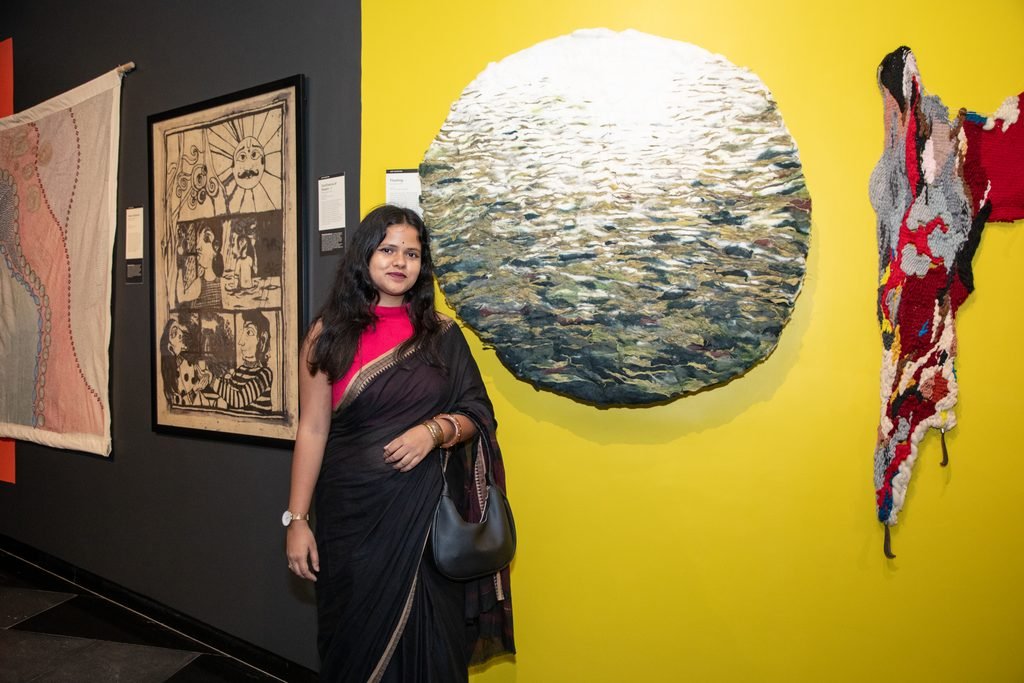
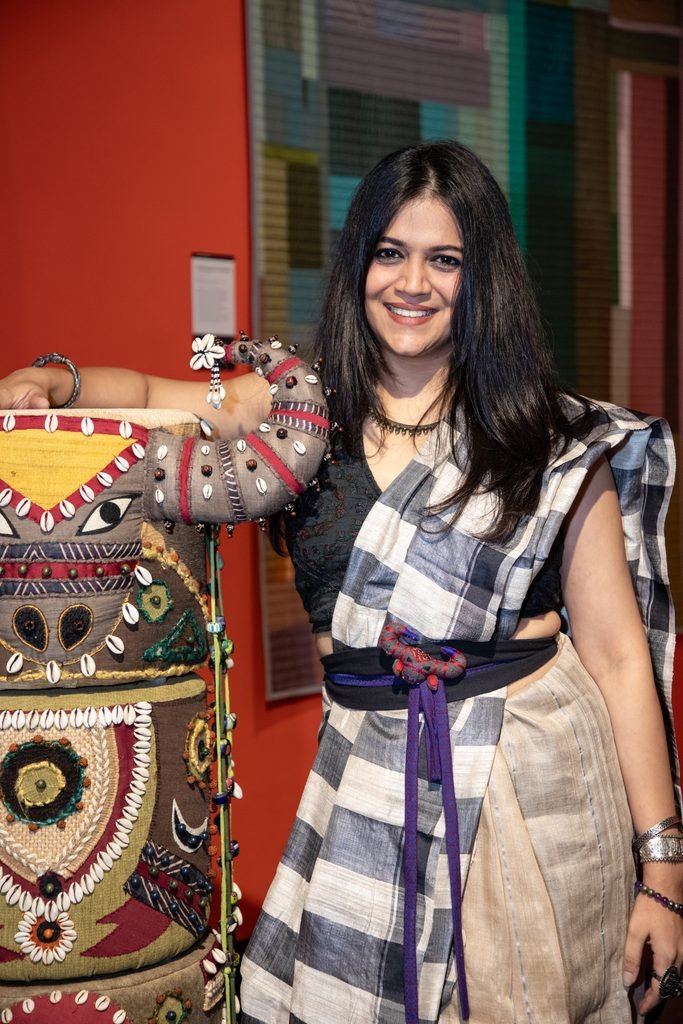
Stuti Kumar turns to textiles to examine feminine identity and women’s labour. Mili Mandal experiments with natural fibres, natural dyes and plant-based materials including algae, jute, cotton and leaves. Diti Mistry transforms discarded fabrics into textile assemblages, sculpture and wearable works, while Pankaj Kondewar approaches cloth as both material and document, considering its relationship to time, labour and ecology.
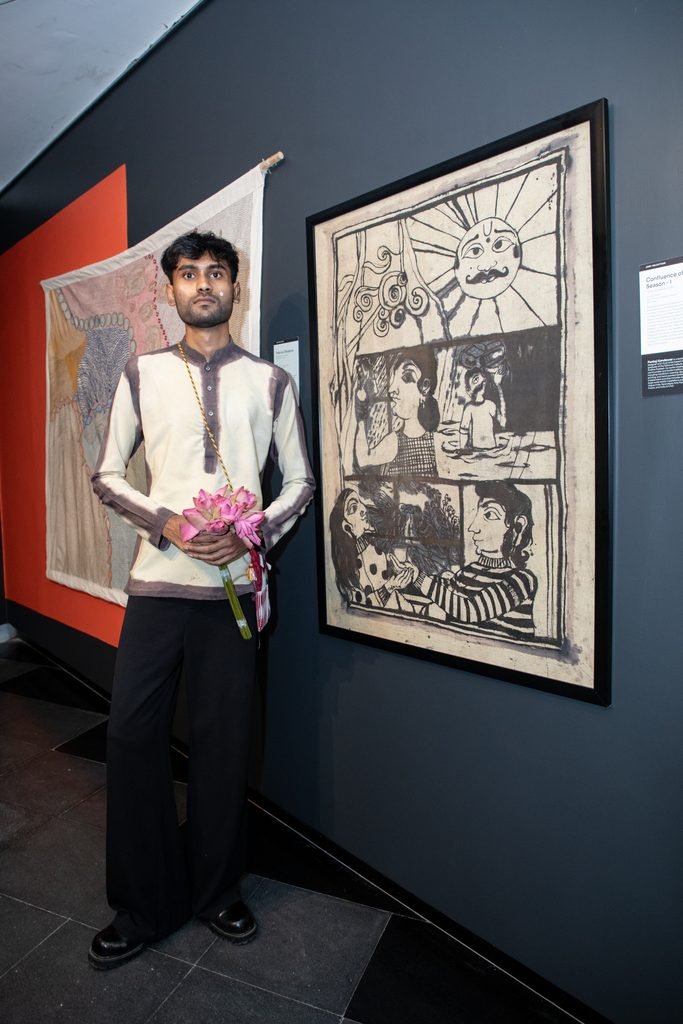
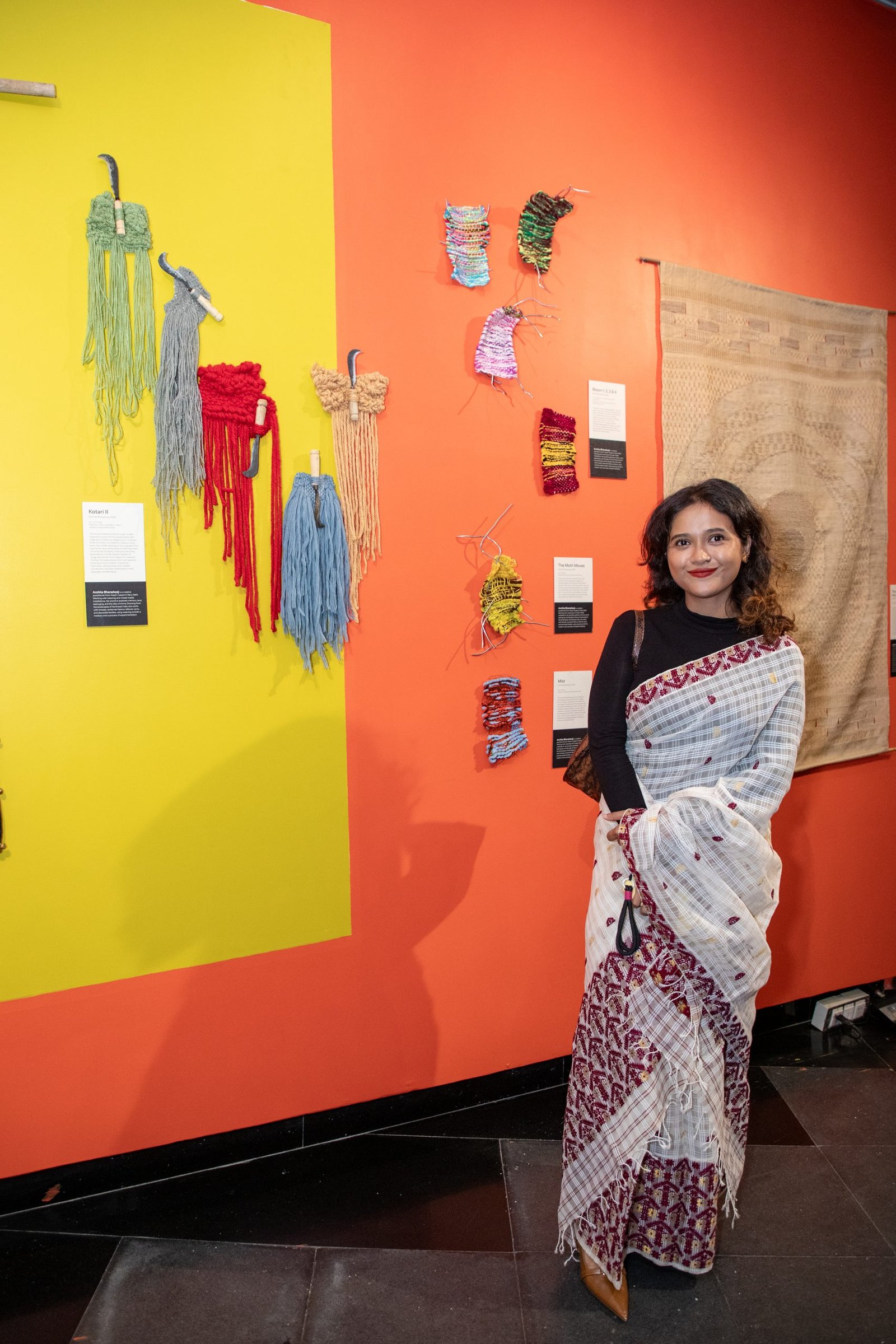
Medha Khosla works with discarded materials through hand weaving and other textile processes, questioning the journey from production to waste. Archita Bharadwaj brings together weaving, memory, land and belonging through reclaimed textiles and leftover yarns. And Jayati Kaushik Mehra moves between printmaking, textiles, embroidery and hand-dyeing, bringing devotion, ritual and spirituality into her practice.
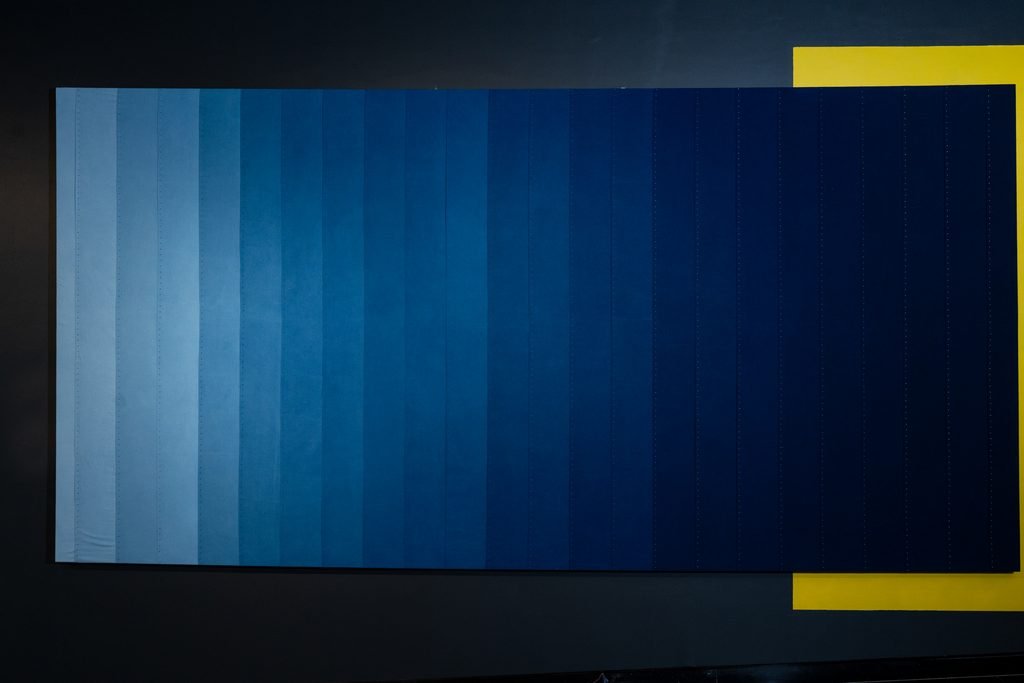
Taken together, the wider cohort makes the exhibition feel less like a hierarchy and more like a conversation.
Assam. Tamil Nadu. Rajasthan. Gujrat. Goa. Delhi. Kolkata.
Different materials. Different communities. Different reasons for making.
Yet the same question keeps returning: what happens when something inherited is allowed to live in the present?
The answer, perhaps, is that it changes.
And that is precisely what Masters in Making seemed willing to acknowledge.
Not quite preservation
This is perhaps what makes Masters in Making more compelling than a conventional craft showcase.
The exhibition does not treat heritage as something that needs to remain untouched in order to remain authentic. Instead, it presents it as something porous. Something that can absorb new contexts without necessarily losing its roots.
That distinction matters.
Because there is a particular kind of nostalgia that often surrounds conversations about Indian craft. We talk about disappearing traditions, endangered techniques and vanishing knowledge, and all of these concerns are real.
But the practitioners in this exhibition are not simply looking backwards.
They are reimagining and making.
And making is an active verb.
The exhibition’s curatorial approach, led by Anjchita Nair, understands this distinction. Rather than arranging heritage as a collection of things to be looked at, it places practitioners with very different histories beside one another and allows their methods to speak across geography and generation.
You begin to see that continuity does not necessarily mean repetition.
Sometimes it means taking something apart and understanding it differently.
Sometimes it means teaching it to someone younger.
Sometimes it means finding a new use for an old technique.
Sometimes it means simply refusing to let a material disappear.
This is where the exhibition’s title starts to make sense.
A continuum is not a straight line.
It bends.
It breaks.
It is picked up again.
And then, the birds
By the time we stepped outside Galerie Romain Rolland, we had spent hours surrounded by textiles.
There was Muga silk and Lambadi embroidery, Bagru printing and Tangaliya weaving, earth-loom techniques and indigenous fibres. There were stories of communities, of makers, of teachers and students, of knowledge that had travelled through generations and was now finding itself in a contemporary gallery in Delhi.
And the ibises were still there.
We had heard them on the way in.
Now, sitting outside, curiosity finally got the better of us.
Chahat, the art historian among us, began looking for an answer to the question we had somehow carried out of the exhibition with us: why the ibis?
The answer took us much further back than Delhi.
In ancient Egypt, the ibis was associated with Thoth, the ibis-headed deity of writing, learning, wisdom and knowledge. He was also regarded as a recorder and keeper of knowledge, a patron of scribes.
It was an unexpectedly perfect coincidence.
Inside the gallery, we had just spent the afternoon looking at knowledge made tangible: knowledge held in a fibre, in a dye, in the movement of a hand, in the repetition of a stitch, in a technique taught from one generation to the next.
Outside, hundreds of ibises were screaming from the trees.
Perhaps it was just a coincidence.
But after an exhibition so full of knowledge, memory and making, it was difficult not to see something poetic in it.
Masters in Making: Threads of Continuum – Reweaving the Future of Heritage succeeds because it does not ask us to admire heritage from a distance. It asks us to look closely at the people who keep it moving.
And perhaps that is the real continuum: not the preservation of something exactly as it was, but the knowledge, curiosity and craft that allow it to become something else.


